

Read Your UAE Car Insurance Policy Like a Pro (2026 Guide)
Buying car insurance is one of the smartest decisions you can make as a vehicle owner in the UAE. However, many drivers make the mistake of purchasing a policy without...
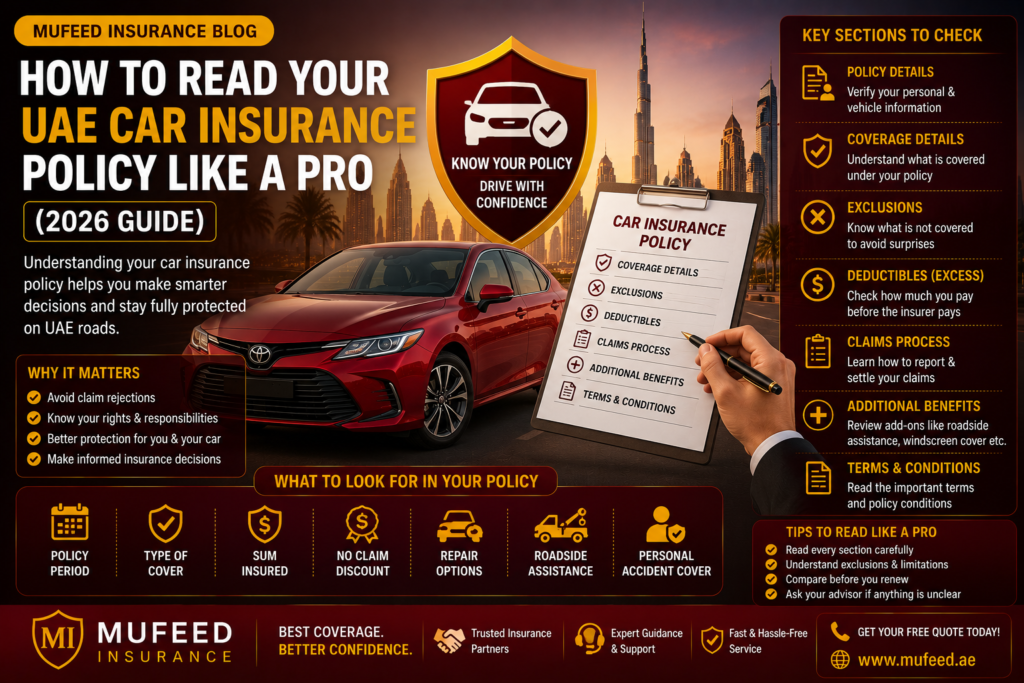
Buying car insurance is one of the smartest decisions you can make as a vehicle owner in the UAE. However, many drivers make the mistake of purchasing a policy without actually reading it. They often focus only on the premium price and assume they are fully protected, only to discover important exclusions or limitations when they need to make a claim.
Your car insurance policy is more than just a document—it’s a legal agreement that explains exactly what is covered, what isn’t covered, and how your insurer will handle claims. Understanding your policy before an accident happens can save you time, money, and unnecessary stress.
The good news is that you don’t need to be an insurance expert to understand your policy. Once you know which sections to focus on, reading a car insurance policy becomes much easier.
In this complete 2026 guide, we’ll explain how to read your UAE car insurance policy like a professional, what every driver should check before signing, and how to avoid common misunderstandings.
At Mufeed Insurance, we help drivers across the UAE compare trusted insurance providers, understand policy benefits, and choose coverage that matches their driving needs and budget. Our experienced advisors believe that informed customers make better insurance decisions.
Why Is It Important to Read Your Car Insurance Policy?
Many drivers only open their insurance documents after an accident.
Unfortunately, that’s often too late.
Reading your policy before you need it helps you understand:
- What your insurance covers.
- What situations are excluded.
- Your financial responsibilities.
- How to make a claim.
- What documents may be required.
- Which additional benefits are included.
Understanding these details gives you confidence every time you drive.
Step 1: Check Your Policy Details
The first section of your insurance policy usually contains your personal and vehicle information.
Carefully verify:
- Policyholder’s name
- Vehicle registration details
- Vehicle make and model
- Registration year
- Engine number (if listed)
- Chassis number (if listed)
- Policy number
- Policy start and expiry dates
Any incorrect information should be reported to your insurer immediately.
Step 2: Identify Your Insurance Type
Your policy will clearly state which type of insurance you have.
Comprehensive Car Insurance
This generally provides broader protection and may include:
- Third-party liability
- Damage to your own vehicle
- Theft protection
- Fire damage
- Natural calamities (subject to policy terms)
- Roadside assistance (if included)
- Windscreen cover
- Recovery services
Third-Party Car Insurance
Third-party insurance generally covers:
- Damage caused to another person’s vehicle.
- Property damage.
- Third-party bodily injury.
It does not usually cover damage to your own vehicle if you are responsible for the accident.
Understanding your policy type is the first step toward knowing your level of protection.
Step 3: Review the Coverage Section
This is one of the most important parts of your policy.
Read carefully to understand what benefits are included.
Depending on your selected plan, coverage may include:
- Accident damage
- Fire damage
- Theft protection
- Flood damage (where applicable)
- Personal accident cover
- Roadside assistance
- Emergency towing
- Battery assistance
- Flat tyre assistance
- Lockout service
- Windscreen repair
- Agency repair
- Non-agency repair
Every insurer offers different benefits, so never assume two policies are identical.
Step 4: Understand the Policy Exclusions
Every insurance policy contains exclusions.
These explain situations where the insurer may not provide coverage.
Common exclusions may include:
- Driving under the influence of alcohol or drugs.
- Intentional damage.
- Illegal vehicle use.
- Driving without a valid licence.
- Mechanical wear and tear.
- Damage caused by racing or unauthorised activities.
- Certain off-road situations unless specifically covered.
Reading this section carefully helps prevent misunderstandings during claims.
Step 5: Check Your Deductible (Excess)
A deductible, also known as an excess, is the amount you may need to contribute toward an approved claim before your insurer pays the remaining eligible amount.
Policies with lower premiums sometimes have higher deductibles.
Always understand:
- Your deductible amount.
- When it applies.
- Whether you are comfortable paying it if a claim occurs.
Step 6: Review Optional Benefits
Many Comprehensive Insurance policies include optional benefits or add-ons.
These may include:
- Roadside Assistance
- Personal Accident Cover
- Replacement Vehicle
- No Claim Discount Protection
- Agency Repair
- Windscreen Cover
- Natural Disaster Cover
- GCC Extension (where available)
Make sure you know which add-ons are included in your policy.
Step 7: Understand the Claims Process
Your policy usually explains how claims should be reported.
Although procedures vary between insurers, it generally includes:
- Reporting the incident.
- Providing required documentation.
- Vehicle inspection.
- Claim assessment.
- Repair approval or settlement.
Knowing the process before an accident occurs can reduce stress and speed up claim handling.
Step 8: Check the Policy Period
Always verify:
- Policy start date
- Policy expiry date
Driving with an expired insurance policy can result in legal penalties and leave you without financial protection.
Set a reminder before your renewal date so you have time to compare insurance providers and renew your policy without a gap in coverage.
Step 9: Review Repair Options
Your policy should specify the repair option available.
Common choices include:
Agency Repair
Repairs are carried out at the manufacturer’s authorised workshop according to policy terms.
Non-Agency Repair
Repairs are completed at insurance-approved garages.
Choosing the right repair option depends on your vehicle’s age, value, and personal preference.
Common Insurance Terms Every Driver Should Know
While reading your policy, you’ll often see terms such as:
- Premium
- Deductible (Excess)
- Comprehensive Insurance
- Third-Party Insurance
- Sum Insured
- Policy Exclusions
- Claim
- No Claim Discount (NCD)
- Roadside Assistance
- Agency Repair
Understanding these terms makes your policy much easier to read.
Common Mistakes Drivers Make
Avoid these common errors:
- Reading only the premium amount.
- Ignoring exclusions.
- Forgetting to check deductibles.
- Assuming every insurer offers the same benefits.
- Not reviewing repair options.
- Forgetting to verify policy dates.
- Choosing insurance based only on price.
- Not asking questions before purchasing.
Taking a few extra minutes to read your policy can save significant time and money later.
Tips Before Buying Car Insurance
Before purchasing or renewing your policy:
- Compare multiple insurance companies.
- Review all included benefits.
- Understand deductibles.
- Read policy exclusions carefully.
- Check repair options.
- Confirm roadside assistance.
- Ask about optional add-ons.
- Choose coverage based on your needs—not just the lowest premium.
Why Choose Mufeed Insurance?
At Mufeed Insurance, we believe customers should fully understand their insurance policy before making a decision.
Our experienced advisors explain every important section of your policy in simple language, helping you compare multiple insurance providers and choose the right level of protection.
When you choose Mufeed Insurance, you receive:
- Multiple motor insurance quotations
- Comprehensive and Third-Party options
- Competitive premium comparisons
- Transparent policy explanations
- Expert insurance advisors
- Fast policy issuance
- Friendly customer support
- Professional claim guidance
Whether you’re buying insurance for the first time or renewing an existing policy, our team is committed to helping you make confident and informed decisions.
Final Thoughts
Reading your UAE car insurance policy doesn’t have to be difficult. By understanding your coverage, exclusions, deductibles, repair options, and claims process, you can avoid surprises and make better decisions if an accident occurs.
Never choose insurance based only on the premium. A well-understood policy provides far greater value than a cheaper policy with limited protection.
At Mufeed Insurance, we’re committed to helping UAE drivers understand their insurance policies, compare trusted insurance providers, and choose reliable motor insurance solutions that provide genuine peace of mind. Our experienced advisors are always ready to answer your questions and help you select the right coverage for every journey.